
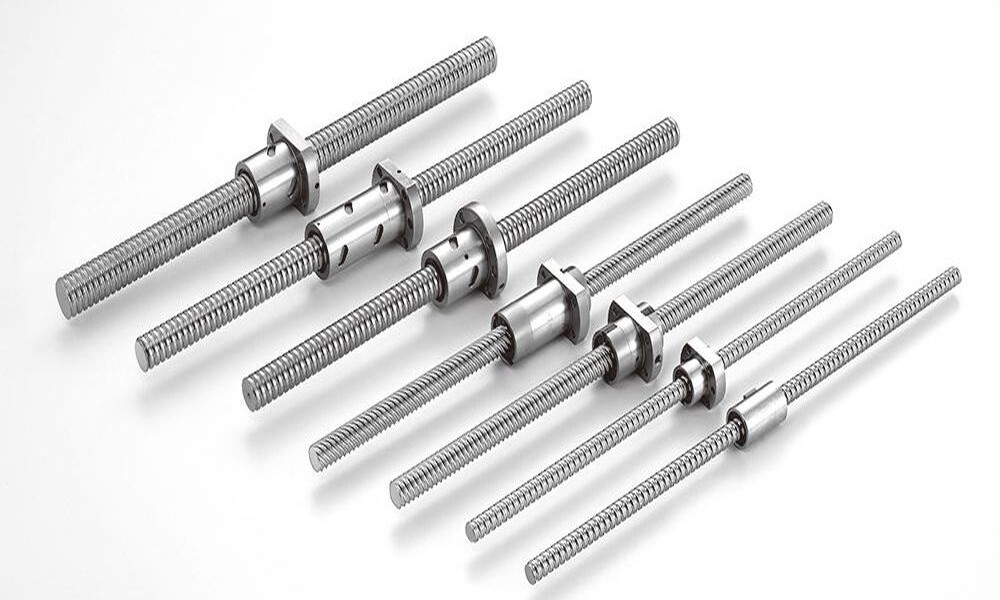
As Thailand’s industrial sector rapidly moves toward full automation, the key to a machine’s success is not only intelligent software but also a highly precise and stable mechanical power transmission system. Among the critical components engineers and manufacturers rely on is the BLK ball screw. However, choosing the right one for heavy-duty and high-precision applications requires more than simply selecting the correct size.
This article will walk you through five key techniques for selecting ball screws that best match your CNC machines and automation systems.
Why High-Precision BLK Ball Screws Are Critical for Automation Systems
Factories often encounter machine inaccuracies after only a few months of operation. One of the most common causes is backlash-the looseness that develops from wear in low-quality ball screws. This issue directly affects the precision and overall quality of manufactured parts.
Choosing BLK ball screws manufactured with advanced technology helps reduce friction between the screw threads and the ball bearings, allowing for smooth motion even at high speeds. This also minimizes heat buildup, a major factor that causes metal expansion and leads to loss of accuracy. Selecting a ball screw from a reliable, high-standard brand is therefore an important first step in reducing production line downtime and maintaining consistent machining performance.
3 Ways to Select the Right Ball Screw Accuracy Class
Many manufacturers assume that choosing the most expensive accuracy grade is always the best option. In reality, effective cost management comes from selecting a grade that fits the application appropriately.
1. C-Grade for general applications (C7-C10):
Suitable for transport or material handling systems where extremely precise positioning is not required.
2. C-Grade for high-precision work (C5 and above):
This level is typically required for CNC machines and robotic arms, where positioning accuracy must be controlled at the micron level.
3. The importance of preload:
Selecting the right preload level (such as P0, P1, or P2) increases the rigidity of the drive system. This helps the machine handle shock loads more effectively while maintaining positioning accuracy.
Selecting Ball Screw Lead and Diameter for Machine Speed
A common question is “What lead should be selected?” The answer depends on the relationship between the motor’s rotational speed (RPM) and the required linear movement speed.
In general, a short lead such as 5 mm provides higher positioning resolution and greater torque, making it suitable for heavy-duty applications like metal milling machines. In contrast, a longer lead such as 10-20 mm focuses on faster linear movement, which is more appropriate for systems that prioritize speed, such as pick-and-place robots or automated conveying systems.
In addition, selecting the right ball screw diameter is equally important. If the diameter is too small compared with the required stroke length, the screw may experience deflection or vibration during high-speed operation, which can reduce stability and overall machining accuracy.
Selecting a BLK Ball Screw (บอลสกรู BLK) for CNC machines and automation systems requires considering several factors, including the accuracy class, preload level, and the appropriate lead and diameter based on the machine’s speed and application. Choosing the right specifications helps reduce backlash, improve motion stability, and maintain micron-level precision, which is essential for both product quality and machine performance.
For engineers or manufacturers looking for BLK Ball Screws for CNC and automation applications, suitable options are available at I.N.B, which offers a range of ball screws designed for industrial use. Their team can assist in selecting specifications that match different machine requirements, helping ensure reliable performance and long-term operational efficiency.