
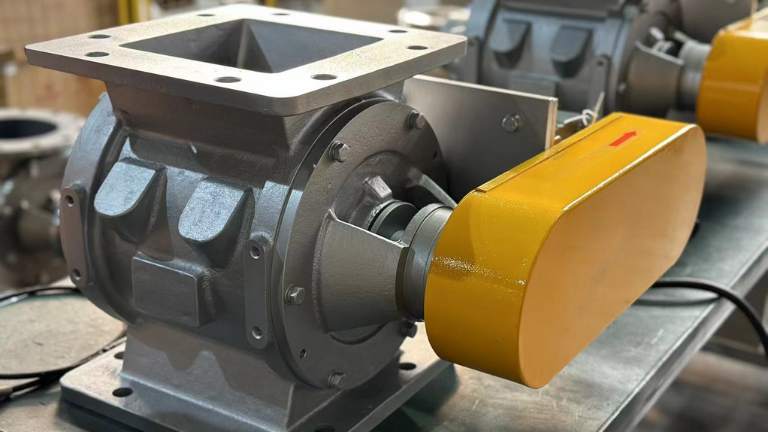
Fine powder handling systems need stable pressure control to keep material moving correctly. Small gaps inside equipment often cause unwanted air movement, which disturbs flow balance. Strong sealing components help maintain steady transfer while protecting system efficiency. Many processing units rely on rotary airlocks to manage the pressure difference between connected chambers. When design quality improves, leakage decreases, which protects productivity. Careful engineering, correct rotor clearance, durable housing structure, and proper installation methods all help maintain system stability during material transfer.
How does equipment design influence internal pressure control?
Accurate engineering improves chamber sealing, which limits unwanted airflow movement, supports stable pressure balance, reduces dust escape, protects machinery condition, and improves transfer stability during continuous material movement through connected processing units.
Why does rotor clearance affect system stability?
Precise rotor spacing reduces gaps where air can pass easily, which helps maintain pressure balance while supporting smoother material movement through enclosed processing channels.
How does sealing the structure limit unwanted airflow?
Strong sealing edges reduce open spaces between moving parts, which prevents airflow escape, improves pressure separation, protects surrounding equipment, maintains stable transfer, while reducing system energy loss.
Why does housing strength matter for air control?
Durable housing walls maintain tight alignment between rotor blades and chamber surfaces, which prevents deformation, limits air passage, and supports reliable pressure separation during extended equipment operation.
How do operational practices support stable transfer performance?
Correct operation improves pressure control inside transfer units.
- Avoid running equipment empty for long periods because airflow may pass freely through open rotor chambers.
- Maintain a steady feed supply so each rotor pocket fills correctly, which limits unwanted air movement between connected sections.
How do blade shapes support controlled material movement?
Carefully shaped rotor blades guide bulk solids smoothly through chambers, reduce trapped air pockets, support balanced discharge while limiting unwanted airflow movement between connected equipment sections.
How does steady rotation support pressure separation?
Stable rotor speed keeps chamber filling predictable, which helps maintain pressure balance, prevents air rushing through empty pockets, and supports reliable transfer performance throughout long operating cycles.
Why does installation accuracy influence sealing performance?
Proper equipment placement keeps internal parts aligned, which reduces uneven wear, protects sealing surfaces, limits air passage through gaps, while supporting consistent pressure control.
How does regular inspection support reliable airflow control?
Routine checks identify wear, surface damage, and clearance changes early, which helps maintain sealing strength, prevents pressure loss, and protects overall transfer performance across processing equipment systems.
How can maintenance habits support longer equipment life?
Regular care keeps parts aligned, which protects system stability.
- Clean internal surfaces often to remove trapped particles, which may slowly create gaps allowing unwanted airflow movement inside equipment.
- Inspect rotor edges carefully because worn surfaces increase the space where air travels easily through transfer chambers.
Strong airflow control depends on careful engineering, correct installation, steady inspection, and responsible operation habits. When each part works correctly, the system holds pressure separation effectively. Reliable transfer equipment improves productivity while limiting unwanted air movement across chambers. Choosing high-quality components also supports stable operation over long periods. Systems designed with advanced rotary airlocksmaintain controlled pressure boundaries, reduce energy loss, and support dependable bulk handling across demanding industrial environments.